
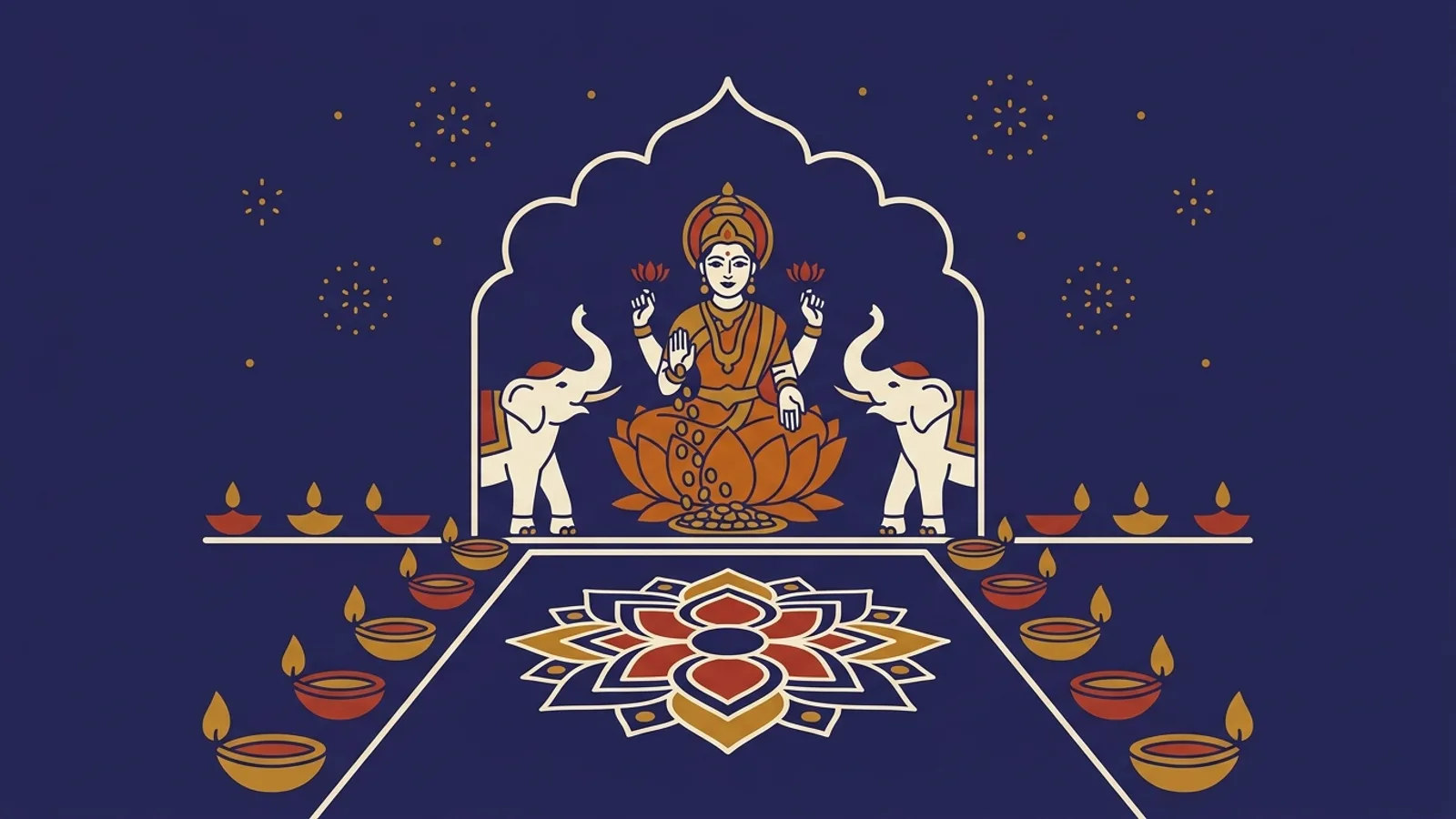
Diwali illustration

Annual festival

Diwali 2028दिवाली

Diwali is the festival of lights marking the victory of light over darkness and the return of Rama to Ayodhya.

Date · New Delhi (28.6139° N, 77.2090° E)

Tuesday, 17 October 2028

Tradition harmony

All regional traditions Chakra tracks agree on this date:

North (Purnimanta)
17 Oct 2028
South (Amanta)
17 Oct 2028
Tamil
17 Oct 2028
Bengali
17 Oct 2028
ISKCON
17 Oct 2028
Smarta
17 Oct 2028

Tithi window

Begins 17 Oct, 12:05 pm

Ends 18 Oct, 8:27 am

October 2028

S
M
T
W
T
F
S
1
2
4
5
6
8
9
10
12
13
17
20
22
23
24
26
27
29
31
  • 3 TueSharad PurnimaSharad Purnima marks the harvest full moon of autumn when the moon radiates nectar-like rays and Lord Krishna danced the divine Raas Leela.
  • 7 SatKarva ChauthKarva Chauth is a day-long fast kept without food or water for the well-being of a husband, broken after sighting the moon.
  • 11 WedAhoi AshtamiAhoi Ashtami is a traditional fasting day observed by mothers for the long life and wellbeing of their children on Kartika Krishna Ashtami.
  • 15 SunDhanterasDhanteras opens the Diwali period and is considered auspicious for buying metal, and for honouring Dhanvantari and Lakshmi.
  • 16 MonNaraka ChaturdashiNaraka Chaturdashi commemorates the triumph of Lord Krishna and Satyabhama over the tyrant demon Narakasura on Kartika Krishna Chaturdashi.
  • 17 TueDiwali(this page)Diwali is the festival of lights marking the victory of light over darkness and the return of Rama to Ayodhya.
  • 17 TueTula SankrantiTula Sankranti is the moment the Sun enters the sidereal sign of Libra, marking the start of the harvest month in several regions.
  • 18 WedGovardhan PujaGovardhan Puja recalls Krishna lifting Mount Govardhan to shelter the people of Braj, and is kept the day after Diwali.
  • 19 ThuBhai DoojBhai Dooj is the day at the close of Diwali on which sisters apply a tilak to their brothers and pray for their long life.
  • 21 SatChhath PujaChhath is a four-day festival of thanksgiving to the Sun and the goddess Chhathi Maiya, with offerings made standing in water at sunset and sunrise.
  • 28 SatDev Uthani EkadashiDev Uthani Ekadashi marks the awakening of Lord Vishnu from his four-month cosmic slumber, concluding Chaturmas and opening the Hindu wedding season.
  • 30 MonTulsi VivahTulsi Vivah is the ceremonial wedding of the sacred holy basil plant (Tulsi) to Lord Vishnu in the form of Shaligram on Kartika Shukla Dwadashi.

Also this month: Purnima (1), Satyanarayan Puja (1), Sankashti Chaturthi (1), Ekadashi (2), Pradosh Vrat (2), Masik Shivratri (1), Amavasya (1), Vinayaka Chaturthi (1), Masik Durga Ashtami (1).

Local horizon calculations

City-wise timings

CityLocal dateTithi window (local)vs. New Delhi
New Delhi17 Oct 202812:05 pm – 8:27 amSame day
Varanasi17 Oct 202812:05 pm – 8:27 amSame day
Mumbai17 Oct 202812:05 pm – 8:27 amSame day
Bengaluru17 Oct 202812:05 pm – 8:27 amSame day
Kolkata17 Oct 202812:05 pm – 8:27 amSame day
Chennai17 Oct 202812:05 pm – 8:27 amSame day
London17 Oct 20287:35 am – 3:57 amSame day
San Francisco17 Oct 202811:35 pm – 7:57 pmSame day

Tithi window shown in each city’s own local time — the underlying instant is the same worldwide.

Diwali, or Deepavali, is the best known festival in the Hindu year, celebrated with rows of oil lamps, rangoli, family meals and the worship of Lakshmi, the goddess of prosperity. The Kanakadhara Stotra is the Shankara hymn many households recite then. For many communities it also recalls Rama's homecoming to Ayodhya after fourteen years of exile.

The main night falls on the new-moon day (Amavasya) of the month of Kartika in the Purnimanta reckoning, which is the Amavasya ending the month of Ashwina in the Amanta system used in western and southern India (why the two labels differ). The Lakshmi Puja is timed to the pradosh period, the stretch just after sunset while Amavasya is still running, so the exact muhurta changes with local sunset.

Regional practice varies widely: in much of the north Diwali is the calendar's turn of the year and is preceded by Dhanteras and followed by Govardhan Puja and Bhai Dooj, while in Bengal the same night is kept as Kali Puja.

Multi-year archive

Diwali in other years